
8-K filings may not be as flashy as IPOs or annual reports, but they are one of the best ways to stay up to date. They are publicly available and ensure that material information and major events are disclosed broadly and promptly, not just handed to insiders. Whether you are a small investor or a financial analyst, Form 8-K is your key to staying ahead of the curve.
Definition
An 8-K filing or the “current report” is filed by publicly traded companies to announce unscheduled, major events. Major events are anything that could impact the company or its shareholders. They can be positive or negative and may affect stock prices. Major or triggering events can include cybersecurity incidents, shareholder vote results, or bankruptcies.
Purpose
The SEC started requiring Form 8-K in 1936 to encourage corporate transparency. Before 1936, there was no standardized way for companies to disclose major events. A company could go bankrupt or fire and replace its directors and not tell shareholders until months later. This created a massive information gap between insiders and the general public. Retail investors could see their shares plummet for seemingly no reason while insiders knew when to buy in or sell out. The new Form 8-K forced companies to disclose these major events and closed the knowledge gap between insiders and the public.
8-K Filing Deadlines
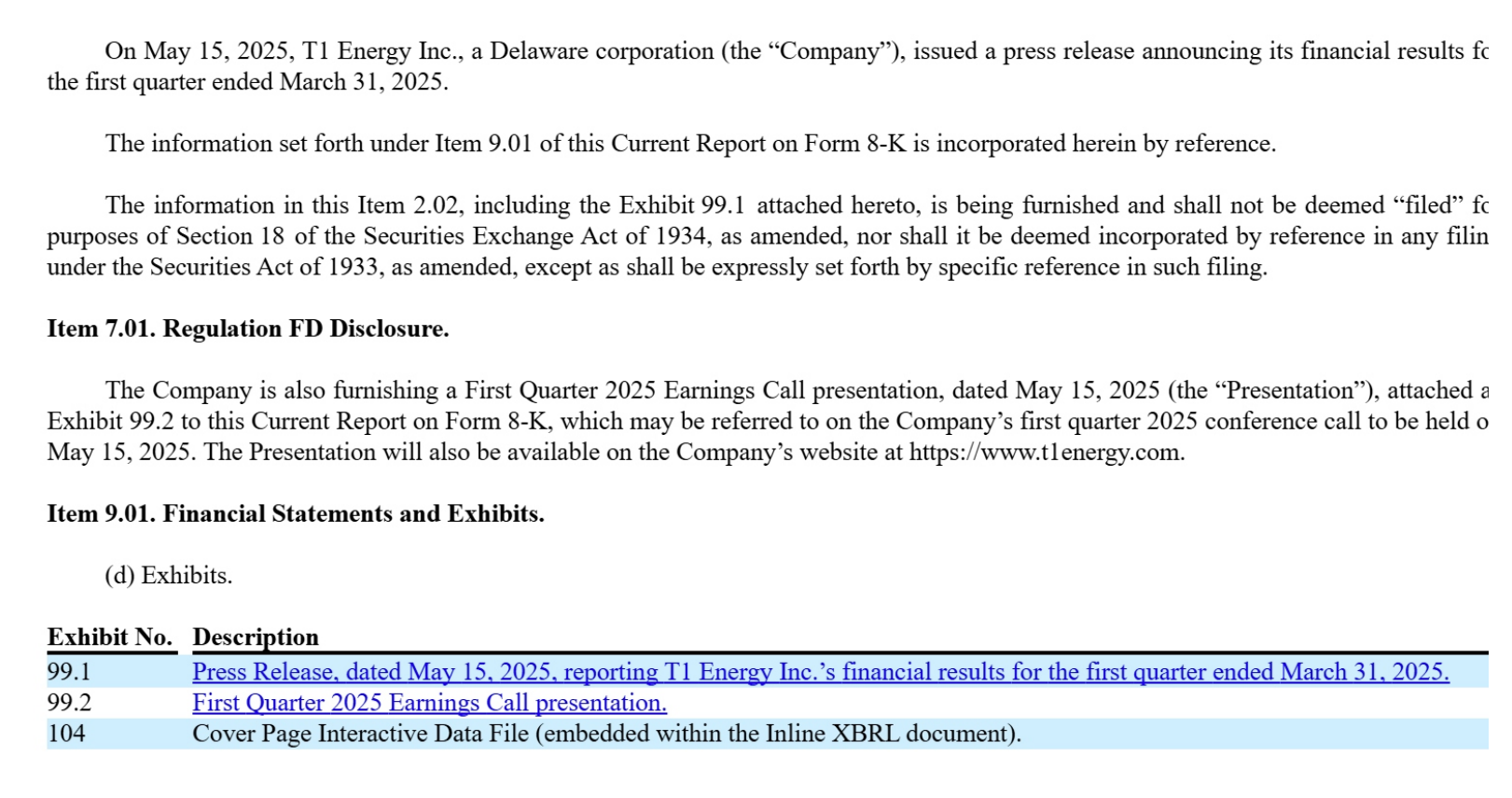
Companies must file Form 8-K four business days after triggering events. For example, if Microsoft’s CFO resigns on Thursday, Microsoft must file Form 8-K by Wednesday. However, there are exceptions to the four-business-day deadline. If Microsoft had a material cybersecurity incident that would pose a risk to national security or public safety if disclosed, it could receive an extension. Voluntary disclosures that do not qualify as triggering events, such as Microsoft’s OFAC violation in 2023, have no deadline. A company may also choose to disclose multiple events at once.
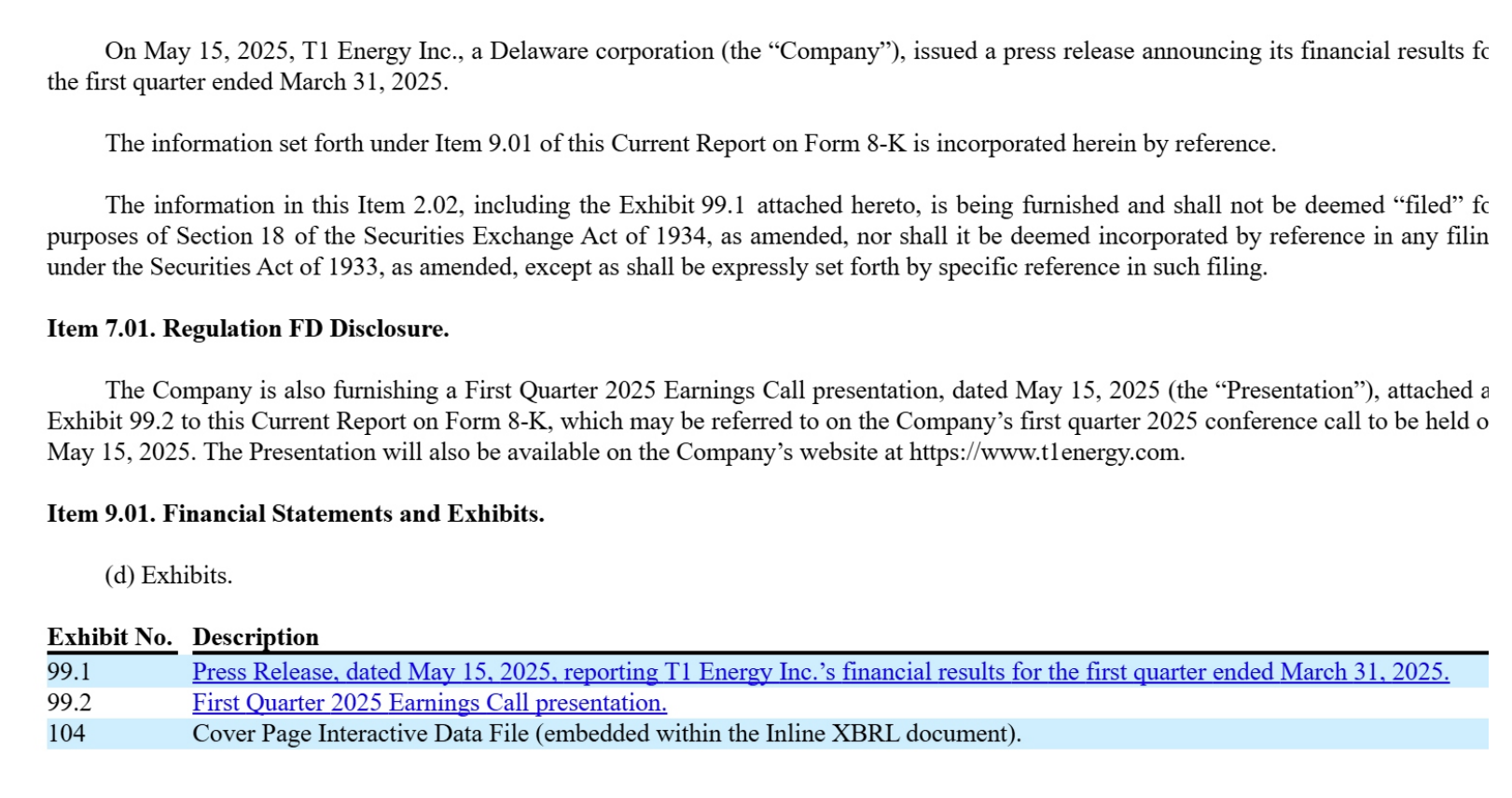 Source: Microsoft’s 8-K Filing
8-K Filings Vs. 10-K and 10-Q Filings
Unlike 10-K or 10-Q filings, 8-K filings are not filed regularly. 10-K or 10-Q filings are filed at the end of the year or quarter. Companies only file Form 8-K after triggering events. Forms 10-K and 10-Q may include the information from Form 8-K in their disclosures.
8-K Filing Requirements
All publicly traded companies must file Form 8-K within four days of a triggering event. There are nine triggering event categories divided into over thirty items. The following is a brief overview of each category:
- Registrant’s Business and Operations: Covers major events affecting the company’s operations, such as Joann’s bankruptcy. Entry into a new material agreement, like if a company signed a major supply agreement with a new international distributor, also falls under this section.
- Registrant’s Financial Information: Discloses material financial events impacting the company’s status or capital structure. Disney’s acquisition of Marvel Entertainment would be reported under this section. Similarly, Disney would also file under this section if it sold Marvel Entertainment.
- Securities and Trading Markets: Reports changes related to the company’s securities or trading status. This includes delisting from an exchange, unregistered sale of equity securities, or material changes in shareholder rights. A company would have to file under this section if they were delisted from the Nasdaq.
- Matters related to Accountants and Financial Statements: Discloses changes or issues involving the company’s external auditors. For example, a company that replaces its independent auditing firm would file under this section. A change of auditors may be a red flag if the auditor gave adverse opinions on the company’s financial statements before leaving.
- Corporate Governance and Management: Covers changes in executive leadership or corporate governance. This can include new director appointments or CEO departures, like the UnitedHealth CEO stepping down.
- Asset-Backed Securities: Covers disclosures specific to asset-backed securities issuers. For example, Carvana could disclose its car loan performance data. Sharing performance data would let investors predict how the current loan pool is performing.
- Regulation FD Disclosure: Used for voluntary disclosures made under the Regulation Fair Disclosure (FD). Companies must disclose relevant information that institutional investors already have access to. If a company closes on a multi-million-dollar private offering, it would report that transaction under this section.
- Other Events: Discloses events not covered in the other sections that are important to security holders. This section includes immaterial cybersecurity incidents and policy revisions.
- Financial Statements and Exhibits: Provides financial statements, pro forma financial information, and other required exhibits. This section includes supporting documentation for other disclosed events. Financial statements confirming Disney’s acquisition of Marvel Entertainment would be included in this section.
Structure
Form 8-K has two parts: the event’s name and description, and any relevant exhibits. To read it, you just have to find the triggering event and its description. The company will usually link supporting documents that provide more information. For example, John Deere’s May 15, 2025, 8-K filing includes an Item 2.02. John Deere included an event description under the item name, then used Item 9.01 to provide the referenced press release.
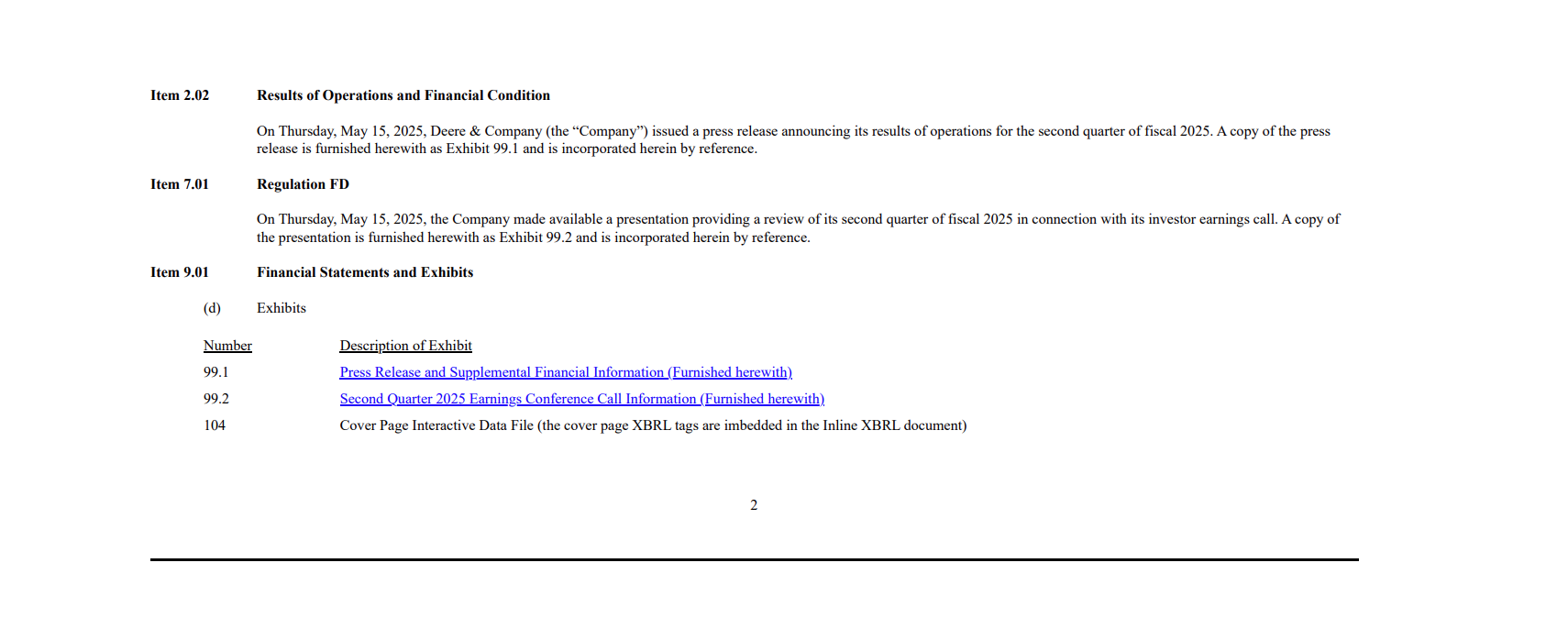 Source: John Deere’s 8-K Filing
Benefits
Despite its brief nature, Form 8-K is vital for investors at all levels. Form 8-K only includes relevant and specific information that may influence investor decisions. Unlike marketing pieces such as press releases, annual reports, or social media, 8-K filings are government documents. Form 8-K has to meet SEC standards and is purely factual. Companies cannot provide slanted data or misleading charts in their 8-K filings. This lets academic researchers access accurate data and understand how specific events affect the market. Retail investors can use Form 8-K to look for red flags such as legal proceedings or adverse auditor opinions before they fully affect the company. Form 8-K also protects companies from insider trading allegations since it encourages transparency.
