

Outstanding shares are a key metric in understanding a company’s financial position and market value. Tracking changes in outstanding shares can help you see how your current investments are doing. If you are looking to make new investments, checking a company’s outstanding shares is an easy way to make sure that your money is in the right place.
What are outstanding shares?
Outstanding shares are all of a company’s shares held by its shareholders. These shareholders can be institutional investors, insiders, or members of the general public. Outstanding shares do not include any stock held by the company itself. You can also think of outstanding shares as the total number of shares available in the market.
Calculating outstanding shares
SEC Filing Data can get you the number in seconds, but the calculation is easy to do yourself. To find the number of outstanding shares, subtract the stock repurchases from the total stock issued. Both of these numbers are available in the 10-K and 10-Q filings.
Floating stock vs. outstanding shares
Floating stock is all stock available for public trade. Outstanding shares include restricted stock owned by company insiders and employees. Since these restricted stocks are not available for trading, floating stock is calculated by subtracting restricted stock from outstanding shares.
Outstanding share changes
Outstanding shares are not static and can change at any time. Events like stock splits, stock buybacks, and new share issuances can change outstanding share numbers and values.
Stock splits and reverse stock splits
Stock splits create more outstanding shares while lowering the price of each share. For example, if a company has ten stocks at ten dollars each and declares a 2-for-1 stock split, it now has twenty stocks valued at ten dollars each. If you are a shareholder, your share just went from ten percent to five percent and is worth five dollars less. If you are a potential buyer, you can now get a share for half the original price. Reverse stock splits are the opposite. They decrease the number of outstanding shares while increasing the price of each share. A 1-for-2 stock split would double the value of each share while halving the number of outstanding shares.
Stock buybacks and new share issuances
During a stock buyback, a company buys its own shares. This lowers the number of outstanding shares while increasing the price of each share. Unlike the reverse stock split, this does not reduce the number of shares per shareholder. New share issuances do the opposite. They add more outstanding shares to the market and lower the price of each share.
Finding outstanding shares in Form 10-Q
- Go to SECfilingdata.com
- Type your company name, ticker, or CIK into the search box
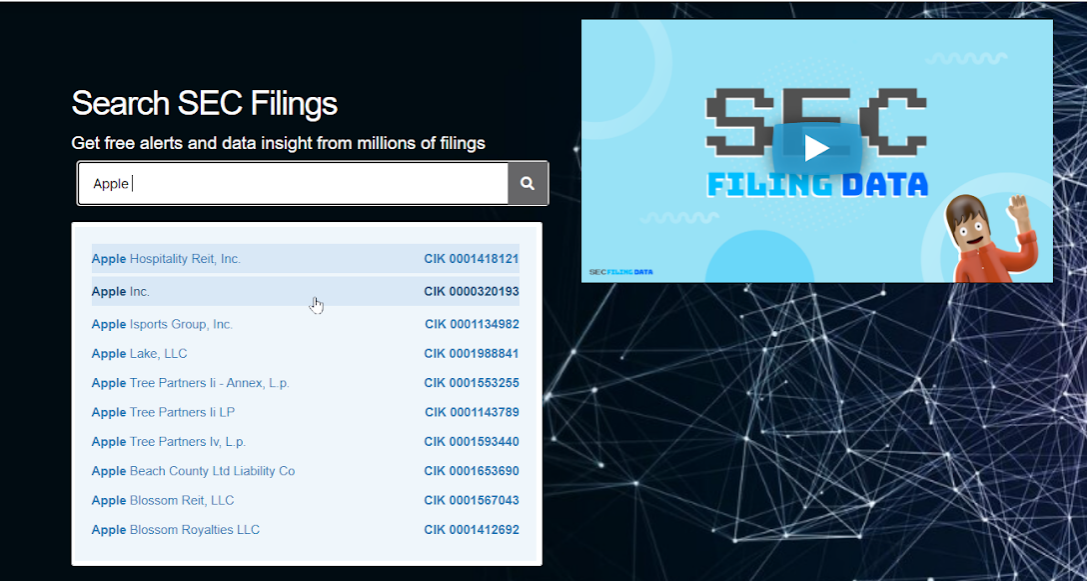
- Press enter on your keyboard or select the magnifying glass
- Select your company name from the menu
- From your company page, select All next to Form Type
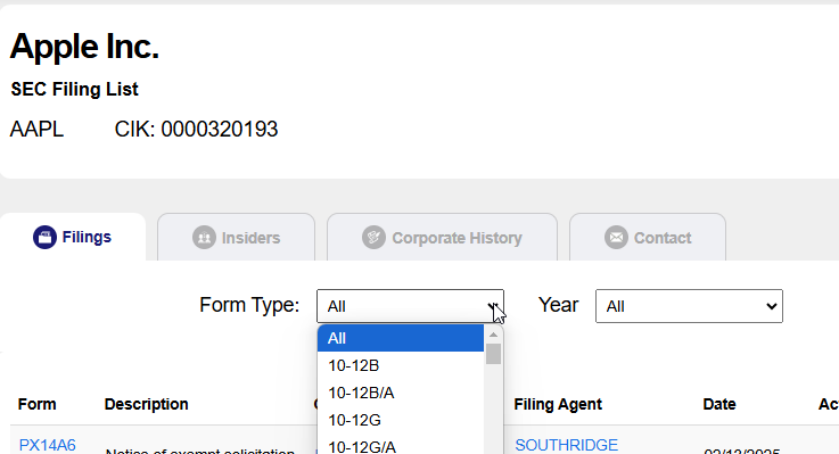
- Select 10-Q from the drop-down menu
- Select View under Actions
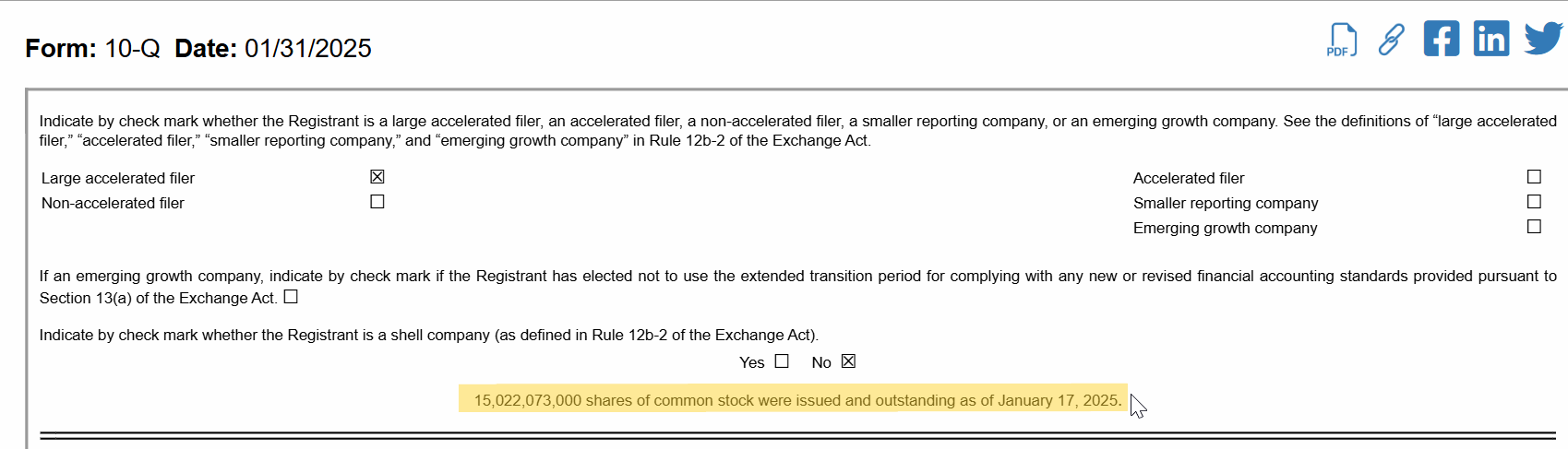
- Go to the bottom of the cover page to view your company’s outstanding shares
Finding outstanding shares in Form 10-K
- Go to SECfilingdata.com
- Type your company name, ticker, or CIK into the search box
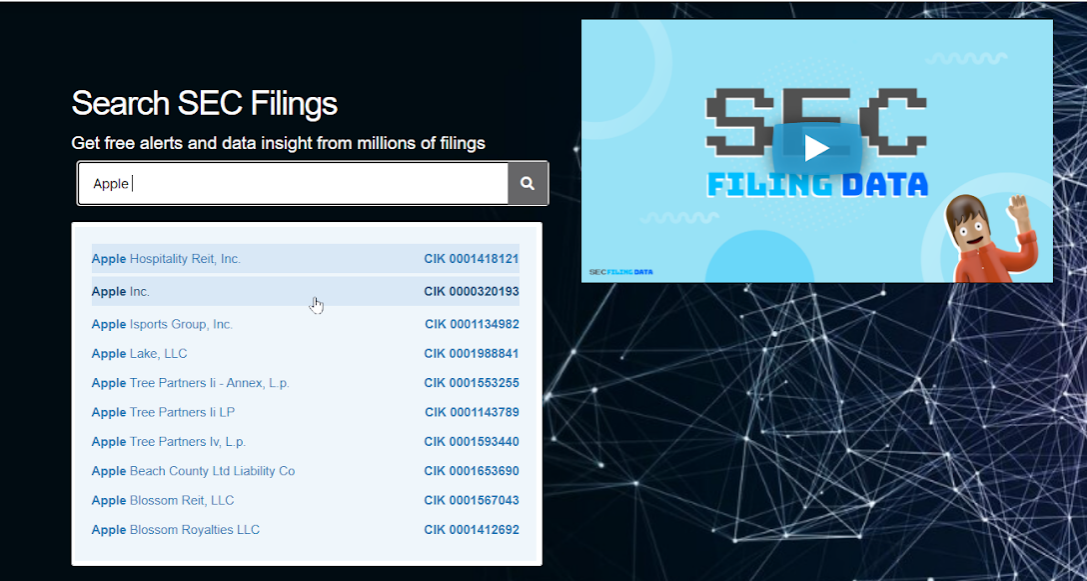
- Press enter on your keyboard or select the magnifying glass
- Select your company name from the menu
- From your company page, select All next to Form Type
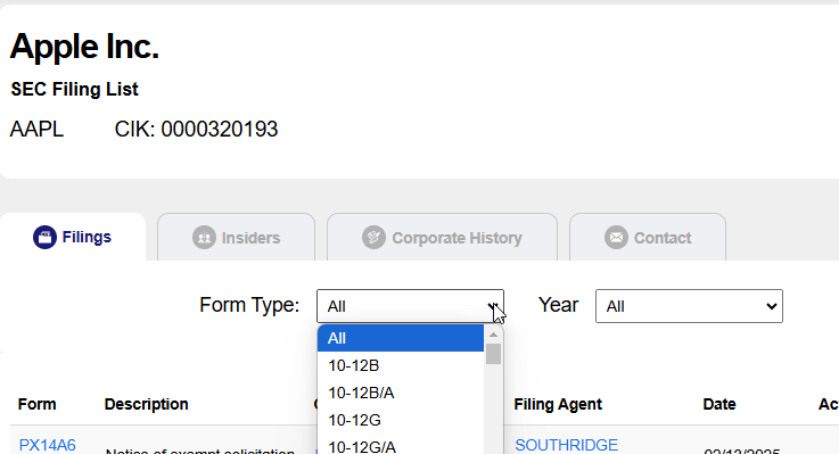
- Select 10-K from the drop-down menu
- Select View under Actions
- Go to the bottom of the cover page to view your company’s outstanding shares
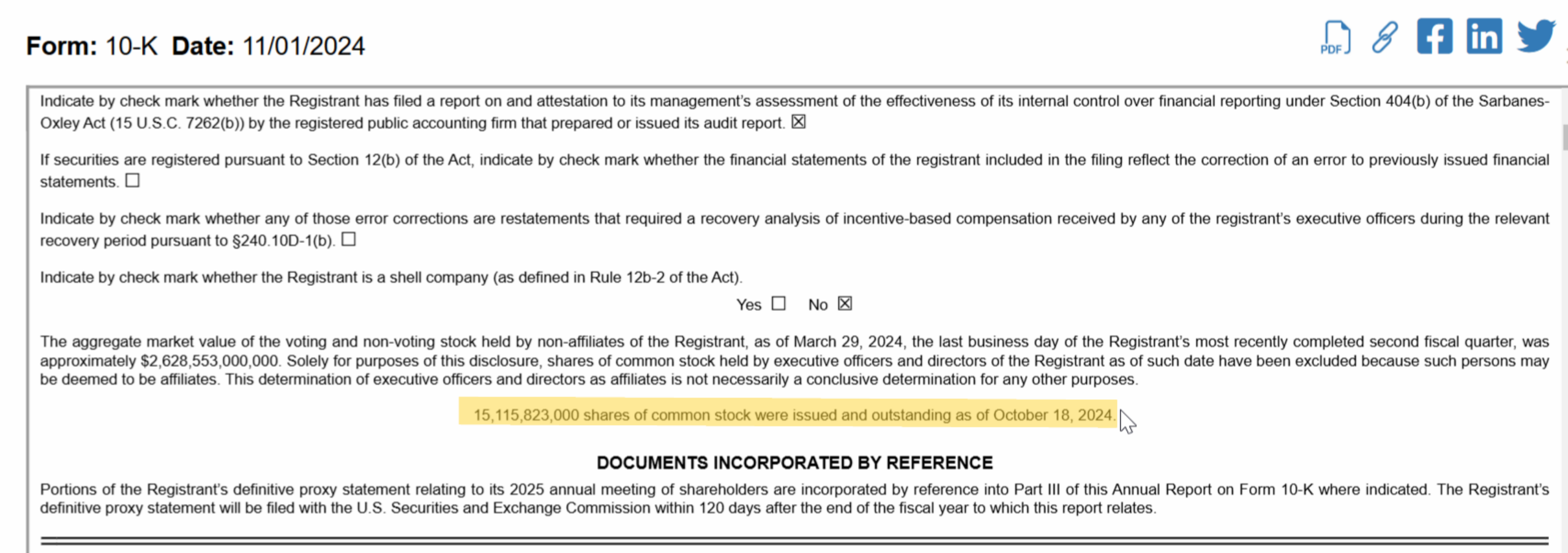 Note: Because Form 10-K is filed annually, the outstanding share number may not be accurate. Form 10-Q will have a more up-to-date number since it is filed quarterly.